Google Search Changes 2026: A Guide for Massage Therapists
How to get your wellness business to show up in AI search results
Google Just Rewrote the Rules of Getting Found. Here's What It Means for Your Massage Practice.
If your website traffic has been sliding and you can't figure out why, you're not imagining it, and it's probably not your fault. The way people find a massage therapist has changed more in the last year than in the previous ten, and most wellness providers have no idea it happened.
Here's the bottom line up front: Google is sending fewer people to your website than ever, but that doesn't mean fewer people are looking for you. They're just deciding whether to book you somewhere new, on the search results page itself, inside AI answers, and increasingly through tools that book the appointment for them. The practices that adapt to where the decision actually happens are the ones filling their schedules. The ones still pouring energy into blog posts nobody clicks are quietly losing ground.
Let me walk you through what changed, why it matters for bodyworkers specifically, and exactly what to do about it. There's a full checklist below you can work through this week.
What actually changed with Google search in 2026?
Four big shifts, and they stack on top of each other.
1. Most searches no longer end in a click. Roughly 60% of Google searches now finish without anyone visiting a website. People get their answer right on the results page. For health and wellness topics, it's even more pronounced, because Google now shows an AI-written summary at the top of about 43% of health-related searches. So when someone Googles "how often should I get a massage" or "is massage good for lower back pain," they read the AI answer and never scroll to your carefully written blog post.
2. The March 2026 core update hit local service businesses hard. This one matters for you directly. Google's biggest algorithm change of the year, which finished rolling out in April, came down hardest on home services, legal, and healthcare. The specific casualty was templated location pages, those near-identical pages that just swap in a city name. If you've got "Deep Tissue Massage in Springfield," "Deep Tissue Massage in Riverside," and they're basically the same page with the town changed, Google now sees that as low value. It can hurt you more than help.
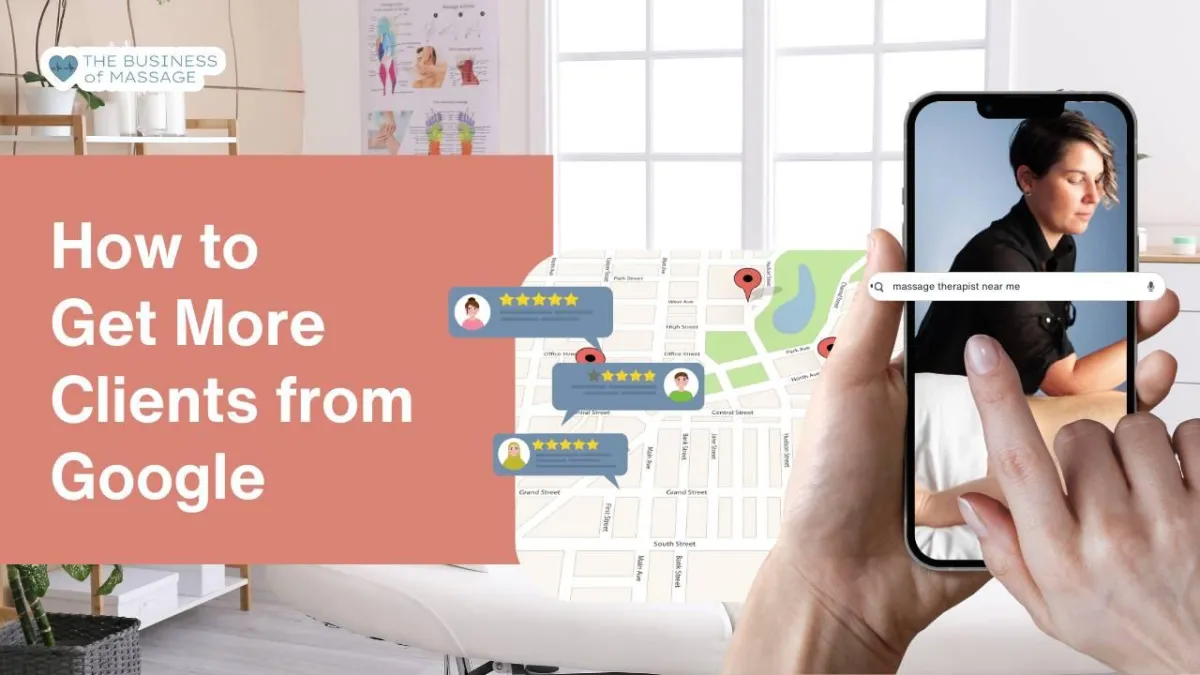
3. Your Google Business Profile became the main event. While website clicks dropped, your Google Business Profile, that listing with your name, star rating, photos, and hours that shows up in Maps and the local results, became where people decide. Someone can now find you, read your reviews, see your hours, and tap to call, all without ever touching your website. Google also changed how it ranks these profiles. It used to reward big, established brand names. Now it rewards activity and engagement, photo views, review reads, taps, and direction requests. A profile sitting untouched for six months is quietly falling behind one that gets updated every week.
4. AI became a real discovery channel. This isn't hype anymore. Recent research found 22% of people now use AI tools like ChatGPT to find providers. So alongside ranking on Google, you now have a second question to answer: when someone asks an AI "find me a good prenatal massage therapist near me," does your name come up?
So is SEO dead for wellness providers?
No, but the goal moved. The old game was rank a page, get a click, hope they book. The new game has three parts: get found in local results, get chosen on your profile, and get mentioned inside AI answers. You're not optimizing for clicks anymore. You're optimizing to be the answer.
This is where three letters matter:
SEO (search engine optimization) is still how you show up in Google's local map results.
AEO (answer engine optimization) is how you become the answer Google's AI summary actually gives.
GEO (generative engine optimization) is how you get named when someone asks ChatGPT, Gemini, or Claude for a recommendation.
The good news for hands-on practitioners: a massage can't be delivered by an AI. Your service requires a real human, a real table, and a real appointment. That makes you far more insulated than, say, a blogger whose entire business was informational traffic. Your job is just to make sure that when the decision happens, you're visible and you're the obvious choice.
The biggest shift: search now books the appointment, and it's already happening
This isn't a someday thing. Google announced it's expanding "agentic booking" to local services in May 2026, and it's already showing up in real searches. Someone can now tell Google, "book me a 60-minute deep tissue massage near me today," and the AI pulls together studios, pulls live availability, and hands them appointment times with a "Book now" button, right there in the results.
Here's the part that should get your attention, because I watched this happen in a real search. When the AI built that list, it split the studios into two groups. The ones with live online booking could see prime placement with actual time slots and a booking button. The ones without online availability, including some of the highest-rated, most-loved studios in the city, got pushed into a second "you'll have to call them" tier with no booking button at all. Same quality. Same reviews. Wildly different visibility, decided entirely by whether the AI could see a bookable calendar.
Read that again, because it flips the usual advice. A five-star studio with twenty years of reputation got demoted below a chain location, purely because the chain had online booking, which the AI could read, and the five-star studio didn't. If clients can't book you online, the AI increasingly acts like you're closed.
So online booking is no longer a "nice to have" or a "someday." It's becoming the price of admission to even appear in these results. The practices that win are the ones whose services, prices, and live availability are clear, current, and easy for a machine to read.
What this means for you, specifically
You don't need to become an SEO expert. You need to do a handful of unglamorous things consistently. Your Google Business Profile is now more important than your website. Your reviews are now a ranking factor, not just social proof. And the content that wins is the content that answers real questions clearly, not the content stuffed with keywords.
Claim and optimize your Google Business Profile
Make reviews an essential system, not an afterthought
Optimize your web content
Make your business name, phone number, address, website URL, and hours consistent across the web
Embed your booking calendar if you can
Get my FREE Google Guide with an AI readiness checklist to learn more about how to do each of these.
Frequently asked questions
Why did my massage website traffic drop even though my rankings didn't change? Because Google now answers many questions directly on the results page with AI summaries, people get what they need without clicking. Your ranking can hold steady while your clicks fall. The fix is to shift focus from website traffic to your Google Business Profile and reviews, where booking decisions now happen.
What's the single most important thing for a massage therapist to do for Google in 2026? Fully complete and actively maintain your Google Business Profile. For local service businesses, it now drives more calls and bookings than your website, and Google rewards profiles that stay active with fresh photos, recent reviews, and accurate information.
Do reviews affect my Google ranking? Yes. Google's local algorithm now weighs engagement and activity heavily, and a steady stream of recent, genuine reviews helps your profile rank and helps clients trust you. Reply to every one.
How do I show up when people use AI to find a massage therapist? Maintain consistent business information across Google, Yelp, and other directories, publish clear question-and-answer content on your site, and build an authentic presence on platforms like Reddit and local community groups. AI tools pull from this wider web, not just your Google profile.
Do I really need online booking to show up in search? Increasingly, yes. AI-powered local search favors practices whose live availability it can read, and it tends to push call-only businesses into a lower "you'll have to phone them" tier, even highly-rated ones. The fix is connecting your scheduler to "Reserve with Google," which puts a Book button on your listing and lets the AI offer your open times. If your software doesn't support it yet, ask them to add it.
Should I stop writing blog posts? Not entirely, but stop writing generic informational posts that AI now answers for free. Write content that genuinely helps a potential client decide to book you: pricing, what to expect, who you help, and answers to the questions they actually ask. Niche + deep dive question/answer type content is best, ie. "Should I get a massage when I am sick?" or "Does myofacial release help with low back pain?"
The takeaway
Search didn't disappear. It moved. People are still looking for exactly what you offer; they're just deciding in new places, on your profile, inside AI answers, and through tools that book the appointment for them. You don't need to chase every algorithm update. You need a complete, active, trustworthy presence, with online booking, the AI can actually see that makes you the obvious yes wherever the decision happens. Start with your Google Business Profile this week, turn on online booking, build your review habit, and you'll already be ahead of most of your competition.
Want the step-by-step version?
Your Google Business Profile is the single highest-leverage piece of all of this, and it's free. I put together a complete guide that walks you through setting it up to actually bring in clients, no ad budget required.
👉 Grab the free guide: How to Get More Clients with Google for Free
Work through it this week, and you'll have done more for your visibility than most practices will do all year.